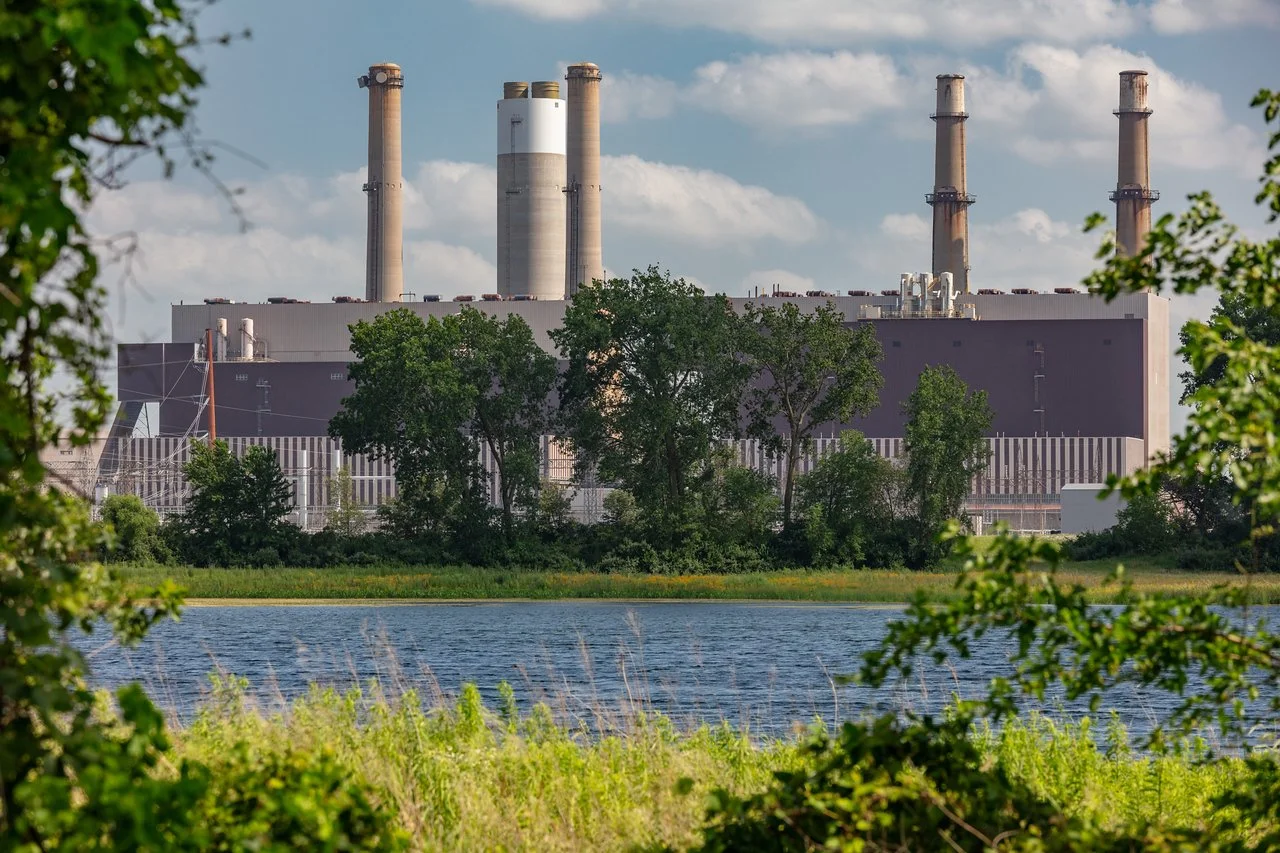
JTNWI is working with Know Before It Grows/Protect Jasper County, IN, to support the community in pushing back against a proposed Amazon AI data center and gas infrastructure at the NIPSCO R.M. Schahfer Generating Station coal plant, and to help residents engage at public meetings and hearings.
About the project Rise Amazon Data Center
Quick Facts
Data Center Name: Project Rise (internal code name: Project Orion)
Developer: NIPSCO as the stand-in
End-User: Amazon
Investment: $7 billion
Address: E 1350 N. and County Road 300, Wheatfield
Size: 13 buildings | 114,000–128,000 square feet each | 321 acres
Water Usage combined impact: Under the draft National Pollutant Discharge Elimination System (NPDES) permit, the combined buildout could withdraw about 34 million gallons/day from the Kankakee River (at peak), more than triple what it uses now, while allowing up to 22 million gallons/day of industrial wastewater into the Kankakee River watershed – coal waste, gas cooling water, and data-center discharge, all through the same main system.
Generation:
Purchase power agreement: Part of a 2,400-megawatt purchased power contract between Amazon and NIPSCO
Backup generators: ~391 total diesel backup generators proposed
Status: Proposed (construction expected to begin in 2027 and be fully operational by 2032, with the 2,600-megawatt combined-cycle gas plant due to be completed between 2029 and 2031)
Permits & Agreements
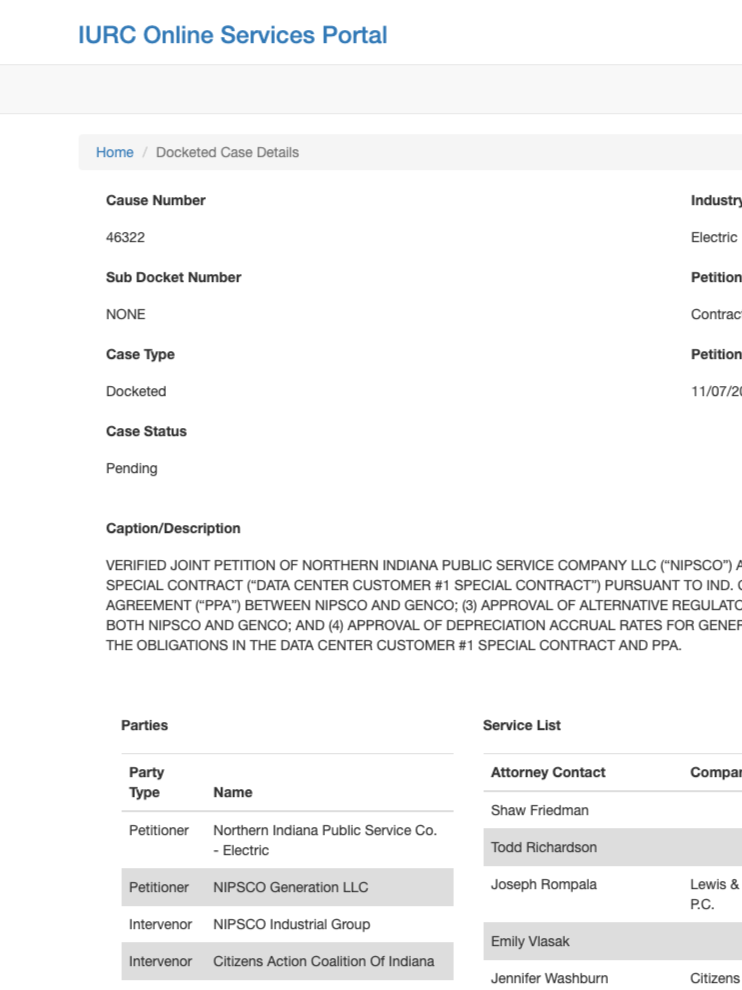
NIPSCO GenCo & Amazon Contract
The November 7, 2025 contract with NIPSCO GenCo, the company’s spinoff to serve the region’s data center load, pending approval by the Indiana Utility Regulatory Commission.
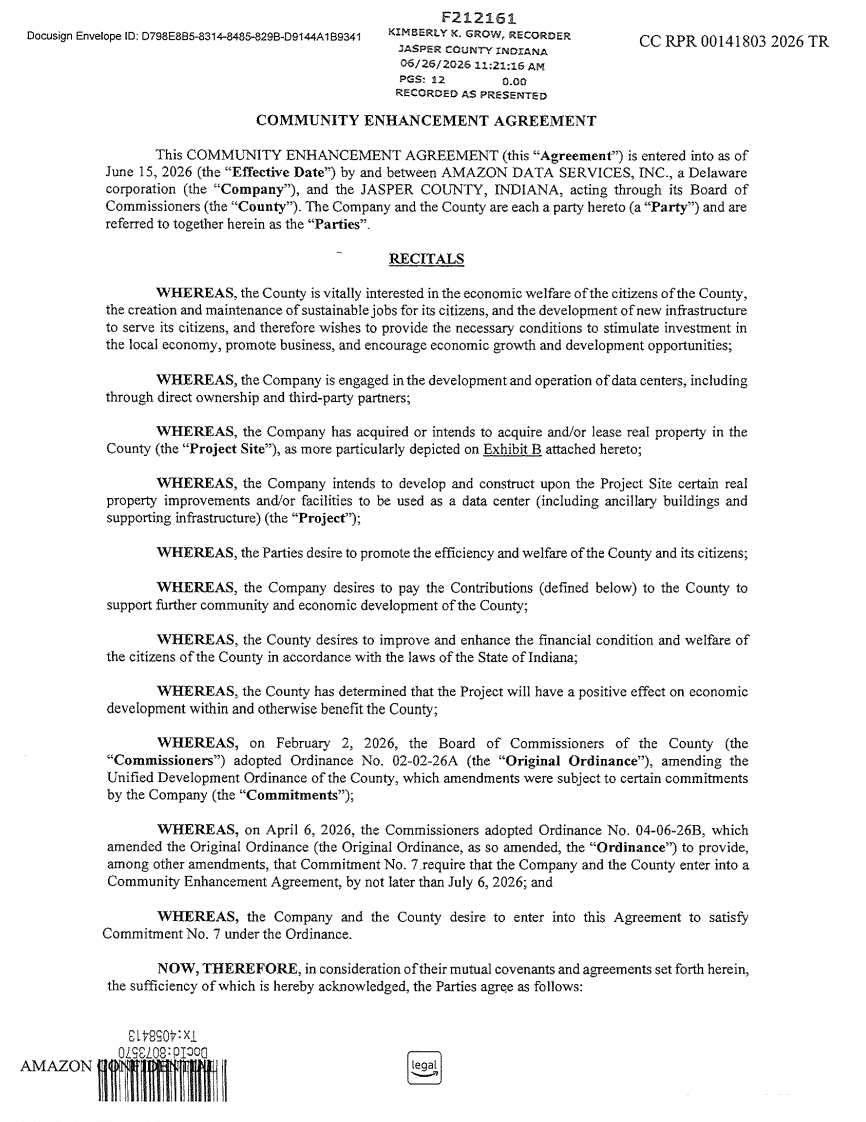
Amazon Community Enhancement Agreement
Community Enhancement Agreement approved June 2026 between Amazon Web Services, Inc. and the Jasper County Comissioners.
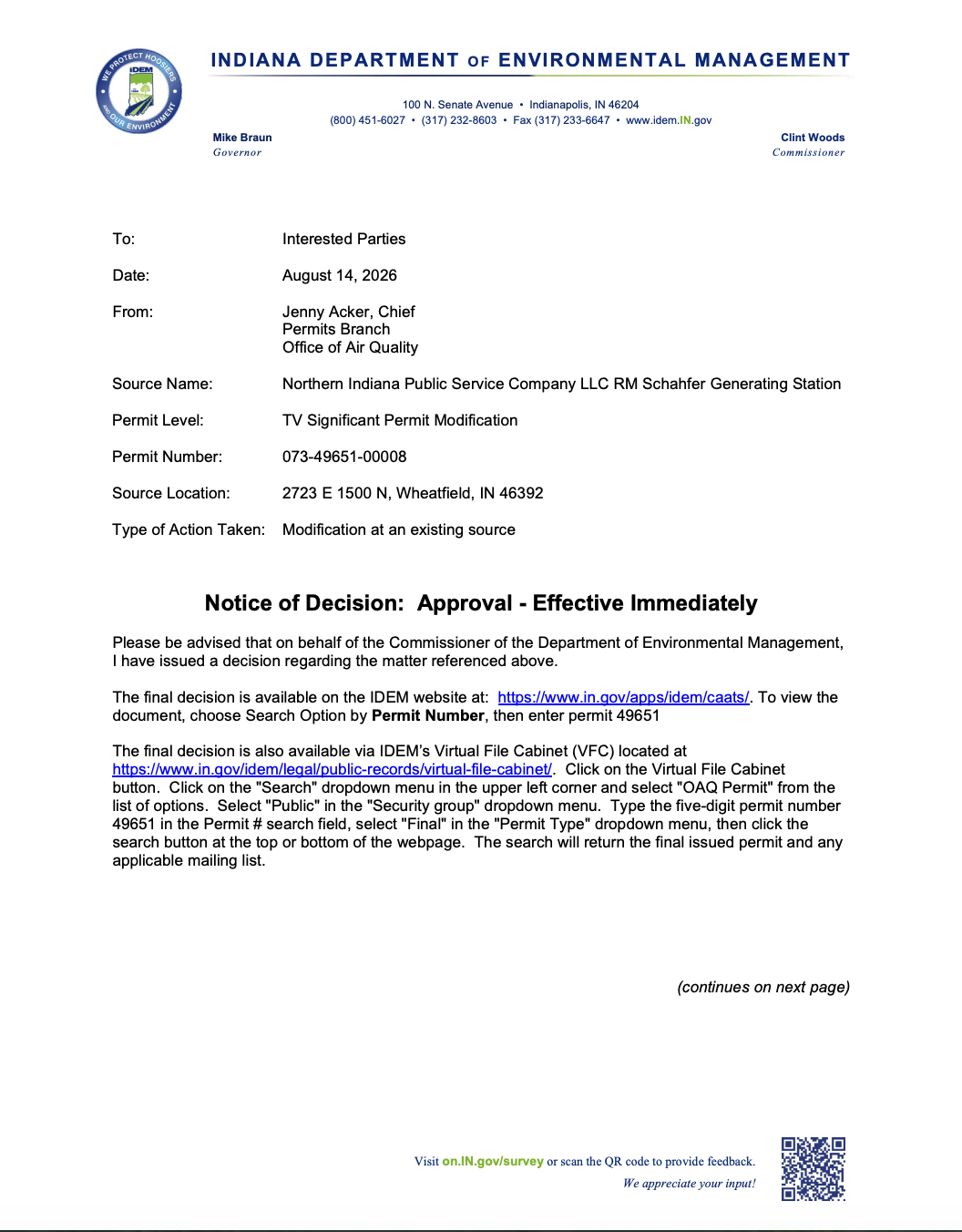
Schahfer Generating Station Air Permit
Final air permit, approved on August 14, 2026, for the combined-cycle gas plant at the Schahfer Generating Station to power currently Amazon’s data centers.
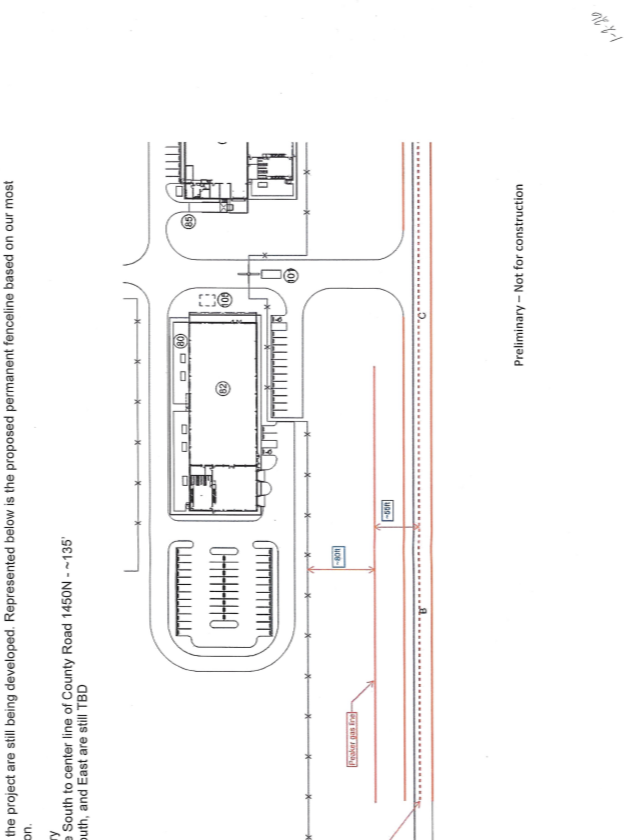
Data Center Rezone Petition
Rezone petition approved on February 2, 2026, by the Jasper County Commissioners.
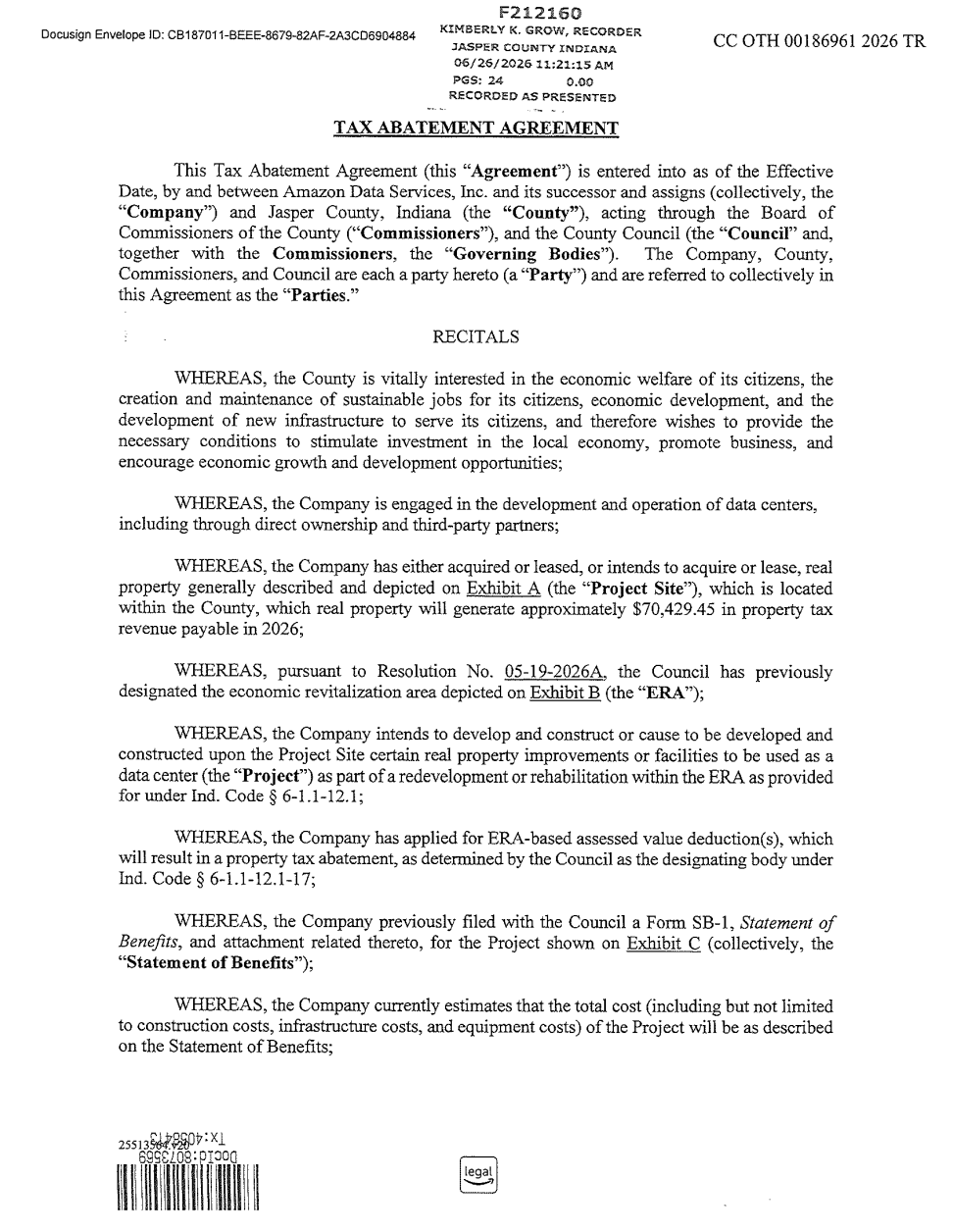
Amazon Tax Abatement Agreement
Tax Abatement Agreement approved June 2026 between Amazon Web Services, Inc., and the Jasper County Council and Commissioners.
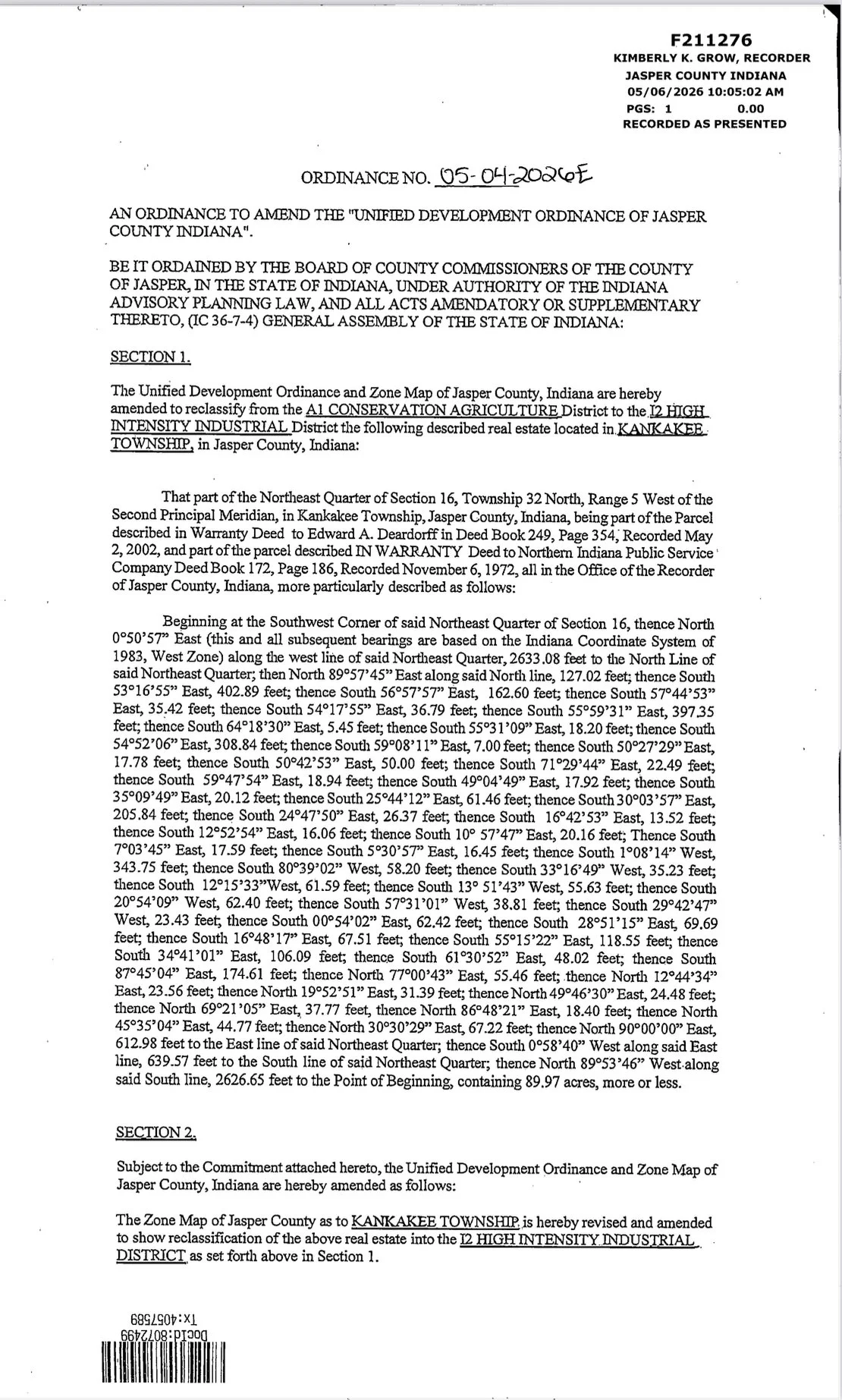
Remaining Parcels Rezone Petition
Rezone petition approved on May 4, 2026, by the Jasper County Commissioners.
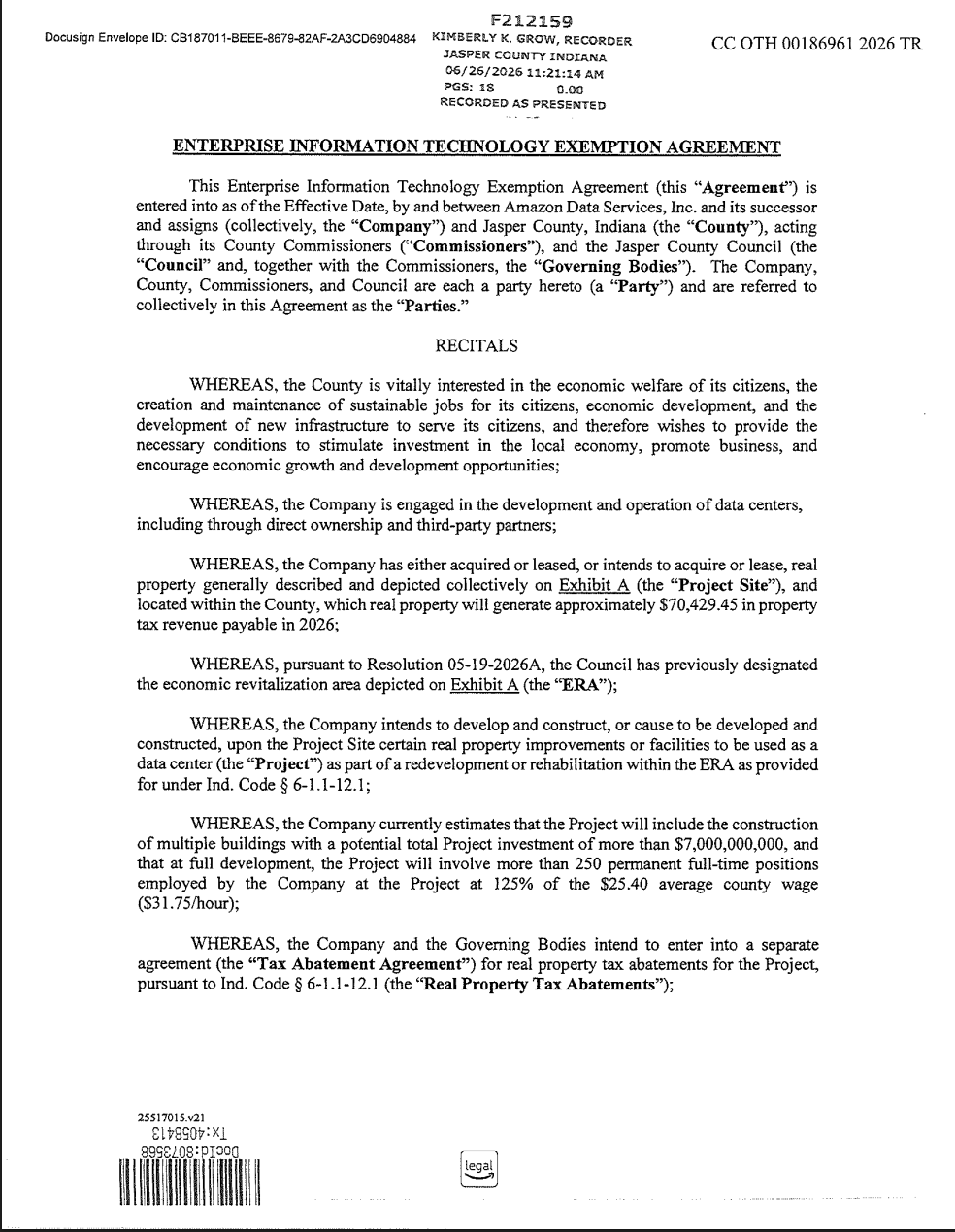
Amazon Enterprise Information Technology Exemption Agreement
Enterprise Information Technology Exemption Agreement between Amazon Web Services, Inc. and the Jasper County Council and Commissioners.
Community Issues Spotlight
-
Resource needs from the data center threaten Jasper County’s shallow aquifer water supply. The data center will be located in Wheatfield, a rural town with a population of just over 1,000 people that relies on private wells. Agriculture is the backbone of the county, with Jasper County hosting more than 600 farms, 91 of which are family farms. Fears about the proposed data center operations are validated when understanding the insatiable water consumption required to power them. The water-consumption toll of the proposed data center and related infastructure is a pressing concern among residents, with the combined impact of the data center and other infastructure expected to consume as much as 34 million gallons a day from the Kankakee River, while pumping out 22 million gallons of industrial wastewater a day coal waste, gas cooling water, and data-center discharge- all through the same main system, according to NIPSCO’s NPDES permit. In fact, a recent study commissioned by the Jasper County Economic Development Commission found that “because of the limited presence of overlying clay or till above the Kankakee Aquifer System, the Kankakee Aquifer System is highly susceptible to potential groundwater contamination.”
Numerous cautionary tales from farm country underscore these issues, like Morrow County, Oregon. There, nitrate contamination from agricultural sources was polluting the aquifer. A series of Amazon data centers began to proliferate across the area, guzzling tens of millions of gallons from that same water table for cooling. That water, mixed with toxic waste, was sprayed onto fields, driving carcinogens deep into the aquifer for 45,000 people. A former commissioner tested the wells. Of the 70 he tested, 68 were toxic, with nitrates nearly four times the federal limit. In just 30 homes, he documented 25 miscarriages and multiple cases of organ failure in people who should have been healthy. This is a tragic example of the potential for further harm to agricultural communities, like Jasper County, from data center operations.
-
This project magnifies the threats posed by existing issues at the NIPSCO RM Schahfer Generating Station, where both the new gas plants and the AI data center will be located. Schahfer is an existing coal plant, ranked among the worst in the country for greenhouse gas and toxic emissions, and was slated to decommission its coal fleet in December 2025. Then, on December 23, 2025, the Department of Energy (DOE) ordered the plant to continue operating its remaining two coal units (Units 17 and 18) under the 202(c) federal emergency orders, brought on by the artificial intelligence (AI) demand, and was just renewed for a fourth time for another 90 days until December 18, 2026. According to NIPSCO, Units 17 and 18 are inoperable, with Unit 18 out of service for the entire order. The orders are actively being challenged, including by JTNWI. NIPSCO is currently asking the Federal Energy Regulatory Commission (FERC) to allow it to collect $38 million in quarterly costs from customers in the Midcontinent Independent System Operator (MISO) footprint, including $2.8 million in profits for the utility.
There is also a looming danger posed by the contamination of coal ash waste at the site, the byproduct left over from burning coal, linked to severe health issues like asthma, kidney disease, heart disease, and cancer. The Environmental Protection Agency (EPA) is considering a new draft rule that includes NIPSCO's petition to keep its unlined, leaking coal ash pond, the 83-acre Waste Disposal Area, operational until 2031, pending approval. EPA data indicate arsenic at 6 times the safe limit and molybdenum at 76 times the limit in groundwater near NIPSCO’s ponds at Schahfer, threatening private water wells and hundreds of acres of farmland and livestock in the area. Crucial ecological areas that serve as a refuge for sandhill crane populations and other wildlife within the Kankakee and Iroquois Rivers watershed, along with Jasper-Pulaski Fish and Wildlife Area, are also at risk from these coal ash contaminants.
On top of the existing mess at the Schahfer Generating Station site, and alongside a new 400-megawatt peaker gas plant, NIPSCO’s forthcoming 2,600-megawatt combined-cycle gas turbine (CCGT) plant could worsen pollution concerns throughout the Wheatfield community. The CCGT, which would specifically service the region’s data centers, is projected to emit more than 7 million tons of CO2 per year, more than double the pollution from NIPSCO's current coal plants combined, and would become one of the state’s top polluters. This signifies a dangerous trend of co-locating AI data centers next to existing polluting infrastructure. While co-location benefits NIPSCO because of the existing power plant and grid interconnection, it again adds a cumulative pollution burden on the surrounding community.
Take Action
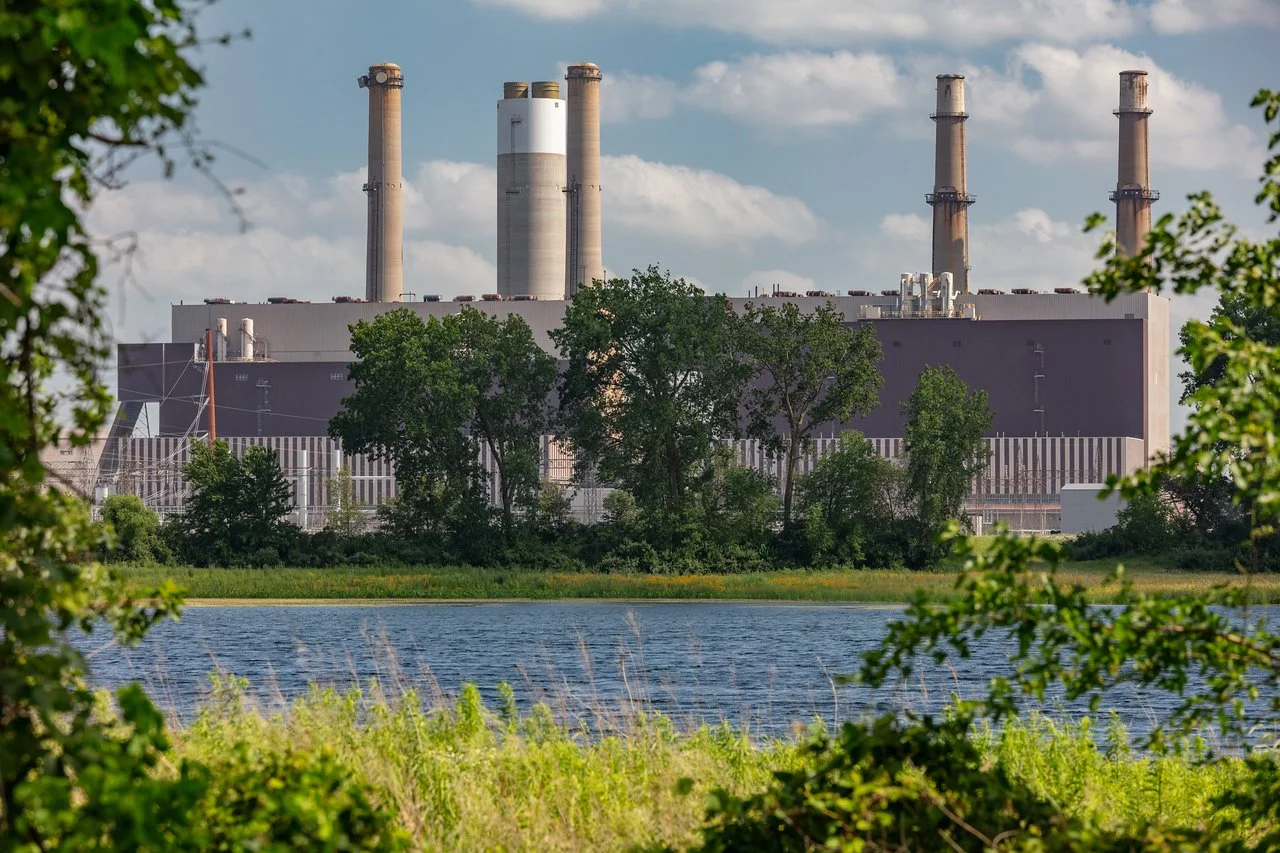
Send a comment to IDEM on nipsco’s water pollution permit
Tell the agency: Protect the Kankakee River - don’t rubber stamp NIPSCO’s wastewater permit for Big Tech!
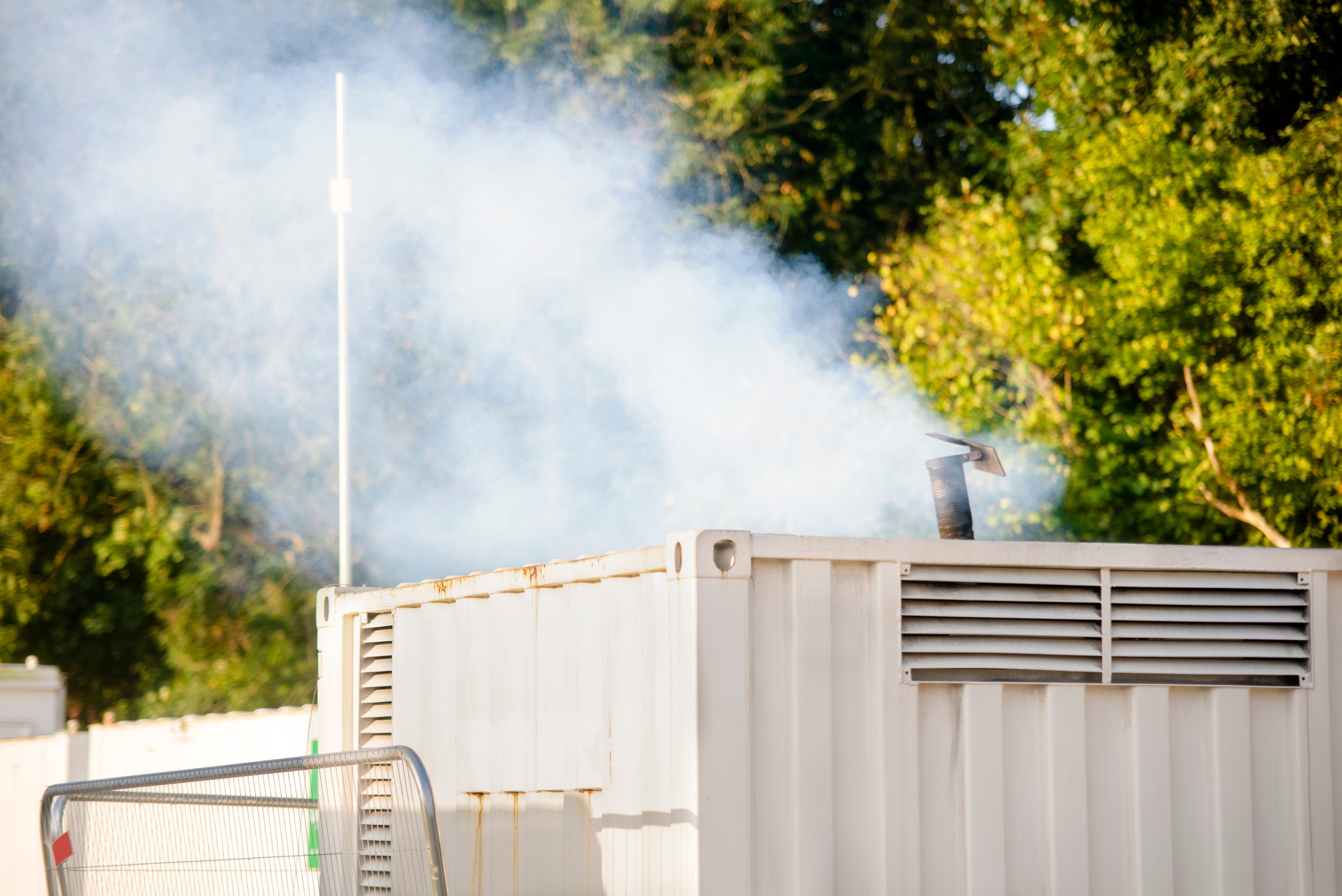
Send a Comment to IDEM on Amazon’s Diesel Generators Permit
Tell the agency: Protect Jasper County from dirty diesel pollution for Amazon's data center campus!