JTNWI is working with Hobart Residents FIRST -Data Center Watch to support the community in pushing back against the proposed Hobart Tech Park, an Amazon AI data center campus, engaging with local community leaders and helping residents turn out to public meetings and hearings, including those on the recent fill permit and tax abatement votes.
About Amazon’s Hobart Tech Park Data center
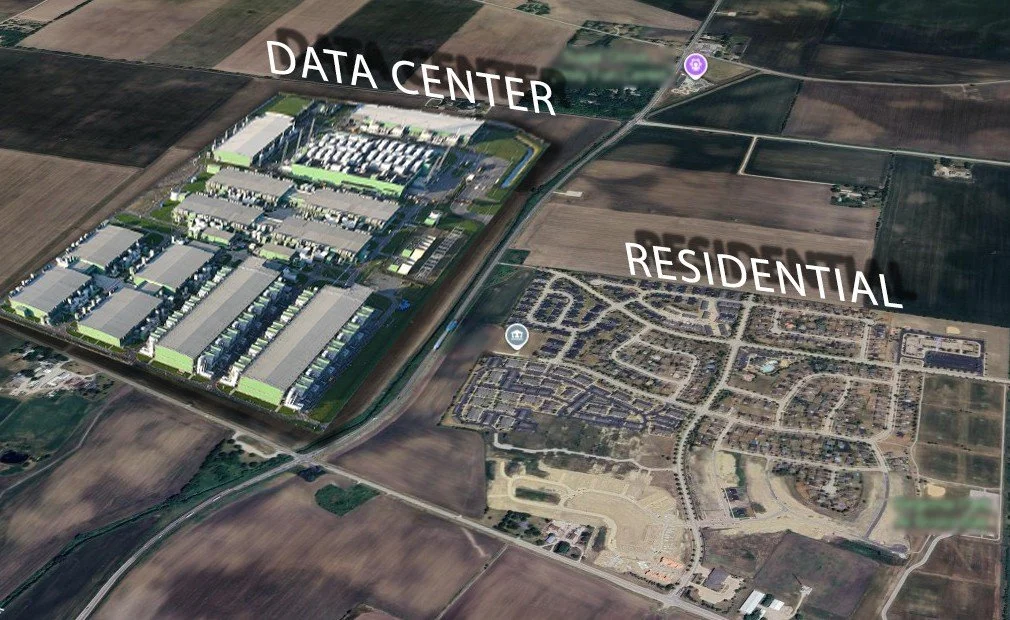
Image courtesy of hobartdatacenters.org
Quick Facts
Data Center Name: Hobart Tech Park
Developer: Tuhaus (formerly Wylie Capital) and Hobart Owner (formerly Hobart DevCo)
End-User: Amazon
Investment: $15 billion
Address: Colorado and 61st Avenue, Hobart
Size: Two facilities, totaling nearly 26 two-story buildings | 200,000 square feet each | approximately 725 acres
Generation:
Purchase power agreement: Part of a 2,400-megawatt purchased power contract between Amazon and NIPSCO
Backup generators: ~782 diesel backup generators proposed
Status: Beginning construction (~2028-2031 completion)
Permits & aGREEMENTS
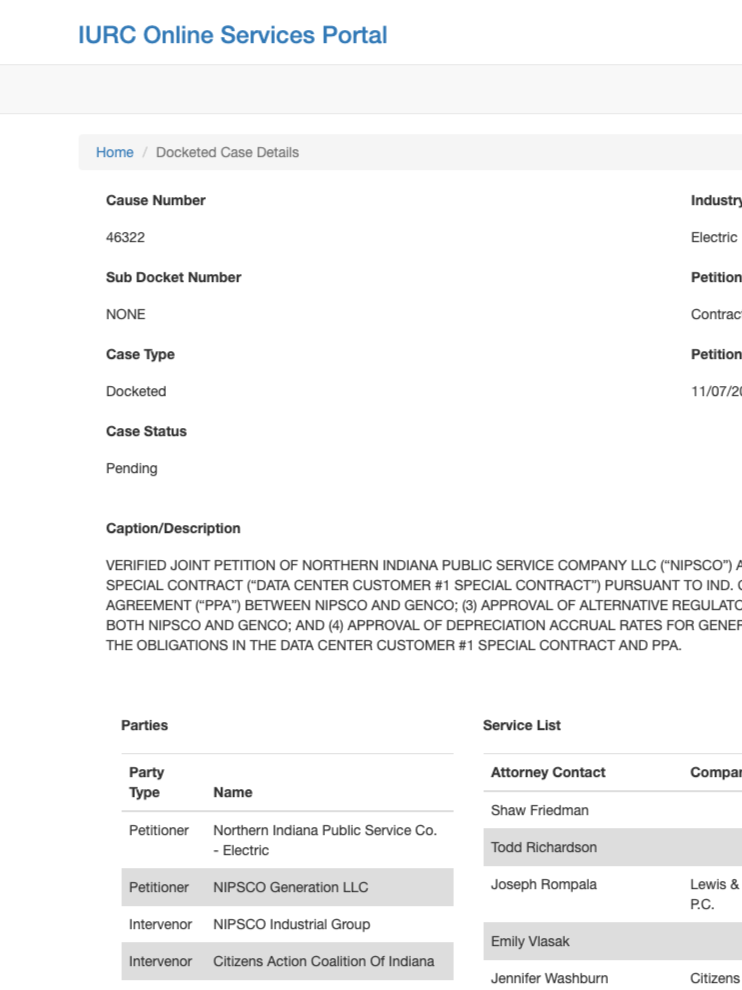
NIPSCO GenCo & Amazon Contract
Contract with NIPSCO GenCo, the company’s spinoff company to serve the region’s data center load, to provide up to 3 gigawatts of new generation capacity for Amazon data centers in the region on November 7, 2025, pending approval by the Indiana Utility Regulatory Commission.
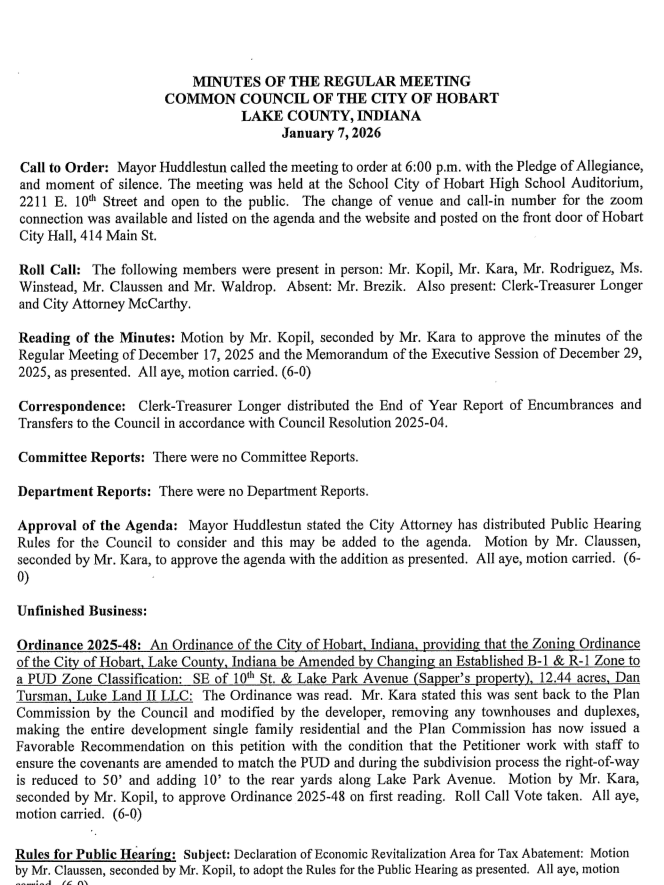
Tax Abatement Resolutions
Tax abatement resolutions approved on January 7, 2026, by the Hobart Common Council.
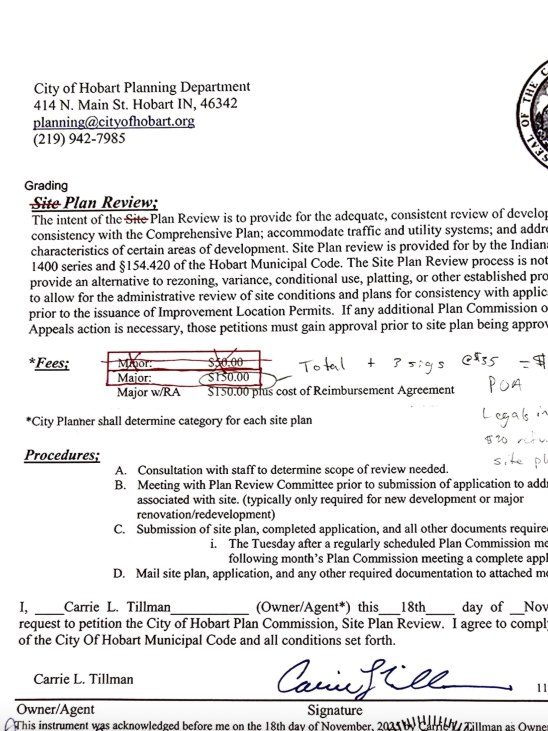
Fill Permit: Tuhaus LLC/Corp Service Company
Fill Permit for Tuhaus LLC/Corp Service Company submitted on November 18, 2025, approved on February 5, 2026.
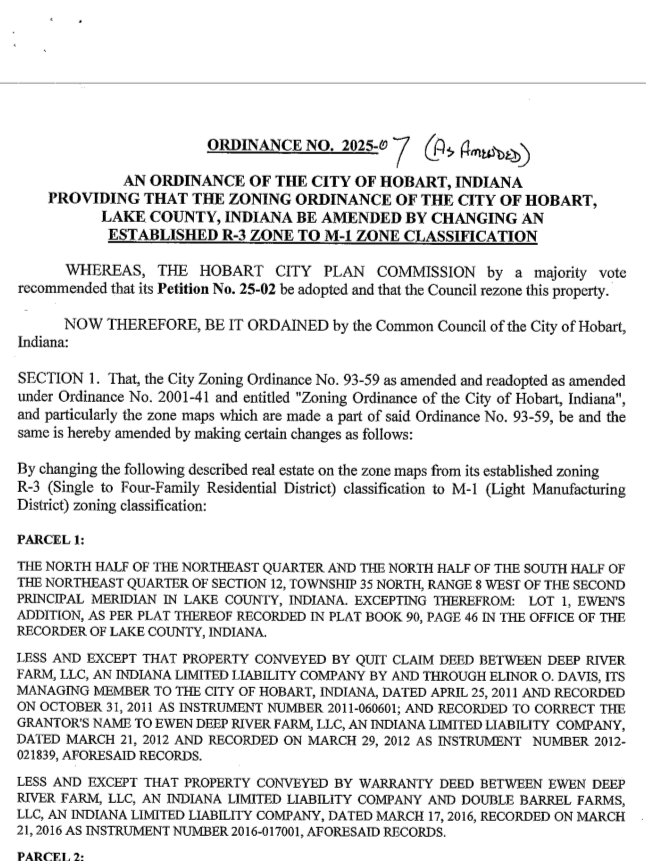
Rezone Petition
Rezone petition approved by the Hobart Common Council over the period of 2025-2027 to rezone the property to light industrial (an M-1 classification).
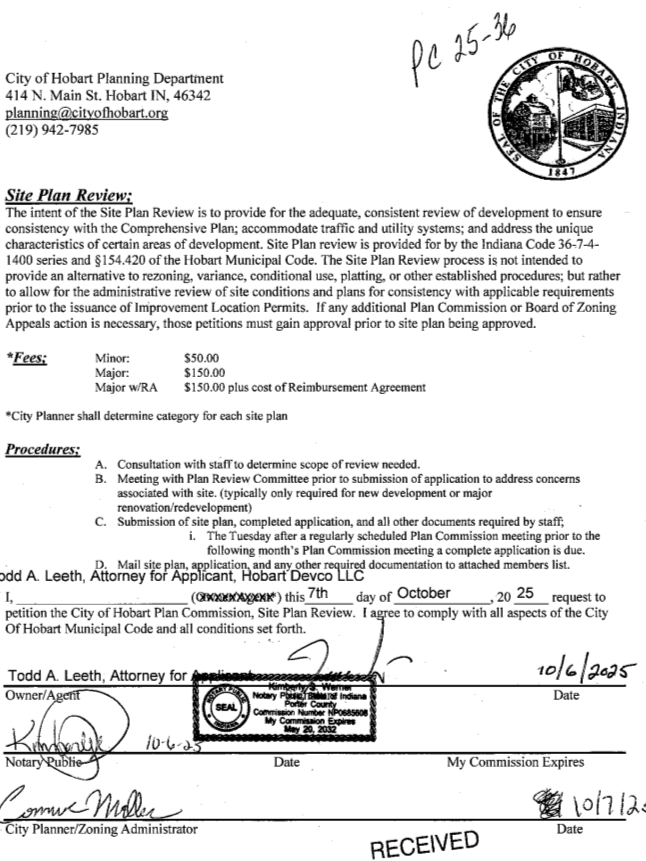
Fill Permit: Hobart Devco LLC
Fill Permit for Hobart Devco LLC submitted on October 7, 2025, approved on November 6, 2025.
community Issues Spotlight
-
From the moment this development came to light, Hobart residents have mobilized in overwhelming opposition. At the November 6, 2025, Hobart Plan Commission meeting, nearly 500 community members packed the room, many offering testimony against the proposed Amazon data center. In a stunning turn of events, as police escorted frustrated residents from the meeting, the Commission issued a favorable recommendation, despite never having reviewed a site plan, in apparent violation of its own municipal code.
On December 8, 2025, a group of residents filed suit against the City, challenging the rezoning.
Public outcry continued on January 7, 2026, when the Hobart Common Council met to vote on tax abatements for the Amazon facility. Once again, hundreds of residents appeared to voice their concerns and urge the council to reject the resolutions. Despite their impassioned testimony, the council voted unanimously to approve the abatement resolutions. The citizens again filed suit.
Undeterred, community members returned on February 5, 2026, for the fill permit hearing. Again, without reviewing a site plan or having a clear understanding of the project’s full impact on the community, the Plan Commission approved the permit. The citizens filed an injunction against the fill permit.
Throughout each stage of the process, residents have shown up in force, steadfast in their demand for transparency, accountability, and a meaningful voice in decisions that will shape their community’s future.
-
The Hobart Tech Park is projected to consume vast and irreplaceable landscapes, including farmland, mature forests, savannas, prairies, and wetlands, erasing ecosystems that have taken generations to establish. Nearly 400 documented observations of endangered, threatened, or rare species have been recorded here, an extraordinary concentration of biodiversity that underscores what is at stake.
Hobart is home to the Deep River Wetlands, which are a priority preservation area and a thriving, living habitat. Great blue herons, egrets, swans, sandhill cranes, and bald eagles depend on these waters. The area serves as a critical migratory stopover, offering exhausted birds a place to rest and refuel during their long journeys north. Habitat loss is already one of the leading causes of catastrophic declines in bird populations. Destroying this landscape would compound a crisis scientists have been warning about for decades.
And habitat destruction is only part of the threat. Wildlife living near large-scale data centers face additional risks from electromagnetic frequencies (EMFs) and wireless radio frequencies. Research indicates that such exposure can disrupt the habitats of flora and fauna, inhibiting insects’ and birds’ ability to navigate, forage, reproduce, and migrate. Pollinators and migratory species rely on delicate environmental cues to survive. Disrupting those systems places already vulnerable populations under even greater strain.