Before I tell you about my journey, I want to reflect on my final day in Detroit, the Motor City.
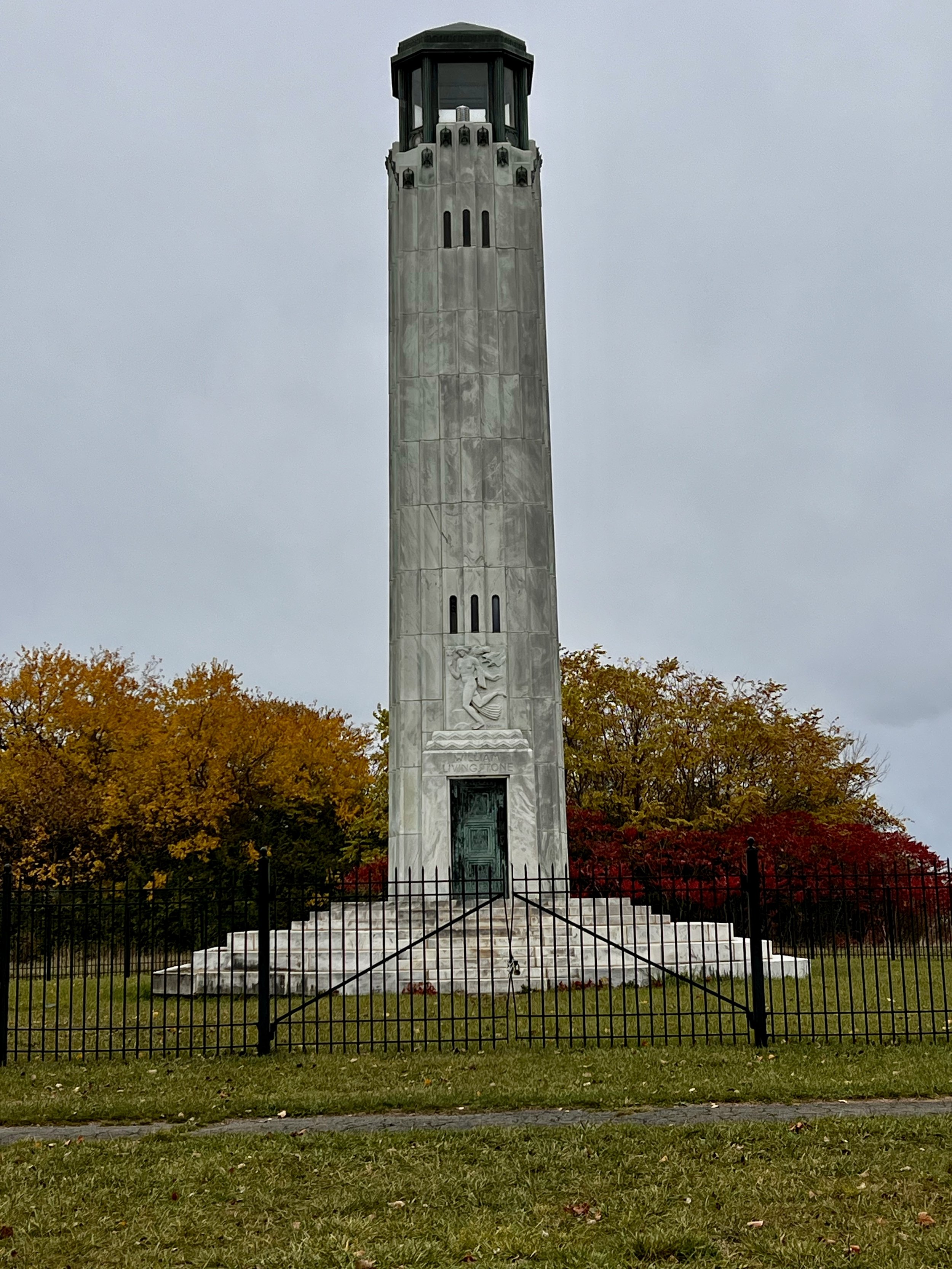
On my way home, I drove over the Douglas MacArthur Bridge to Belle Isle Park. Last time I was in town, many years ago, much of the park was abandoned and vandalized. I thought it was gorgeous then, but now, with renovations and buildings reopened, I was simply awestruck. As I drove the one-way road around the island, I saw a lighthouse in the distance. If you’re familiar with my adventurous tendencies, you know what happens next. Despite it being a brisk 40 degrees, drizzling, and very windy, I pulled over to hike the half-mile prairie trail. Growing up in a working-class family of seven children, we couldn’t afford to go to theme parks or shopping malls; instead, we found fun in free-to-roam spaces like Belle Isle.
Built in 1930 of white Georgia marble, the Art Deco-style William Livingstone Memorial Light is the only all-marble lighthouse in the United States. This lighthouse is similar to the beautiful buildings scattered along the Indiana Dunes National Park. They, like many places in Detroit, are remnants of a golden age of industry–stunning artifacts tucked away among the dunes and smokestacks. On the walk back to my car, I thought about how comfortable I am in this city. Maybe it’s the hum of the steel mills and factories that surround both Detroit and my home in Northwest Indiana, or perhaps it’s the people, who are so good-natured that you would never know how hard it can be to live in a place like this. I learned a lot on this trip, but what surprised me was how deeply emotional this learning would be. How meaningful, and how–even as I write now–I feel connected to Detroit, for we have much in common.
I found myself in Detroit to attend a steel conference. People from across the country who work on this topic came together to share their experiences and ideas and to discuss what our steel communities are facing in this current polluter-profits reality. I was honored to help our partners at Gary Advocates for Responsible Development (GARD) give a presentation about Northwest Indiana. I live in Whiting/Robertsdale, within a mile of the BP Whiting Refinery and with three large steel mills, one after another, just behind it. It is a unique landscape that few people can wrap their heads around, so I was tasked with describing to them the sacrifice zone that is home and the political landscape that perpetuates it.
The goal behind the conference was to use our collective expertise to strategize how to bring Green Steel to America. The technology known as “green steel” uses green hydrogen, generated from renewable energy sources such as wind and solar, to reduce iron ore into a spongy material called direct-reduced iron (DRI). This DRI is then melted in an electric arc furnace powered by renewable energy. This eliminates the use of fossil fuels and the massively polluting blast furnace, reducing carbon emissions by 99%. For communities like ours, that is the difference between life and death, not just of us community members but of an aging industry our region needs to survive. It isn’t just about us, though. Blast-furnace-produced steel accounts for 11% of global CO2 emissions. This is a critical shift for a world already experiencing the climate crisis and the catastrophic impacts of unnatural disasters.
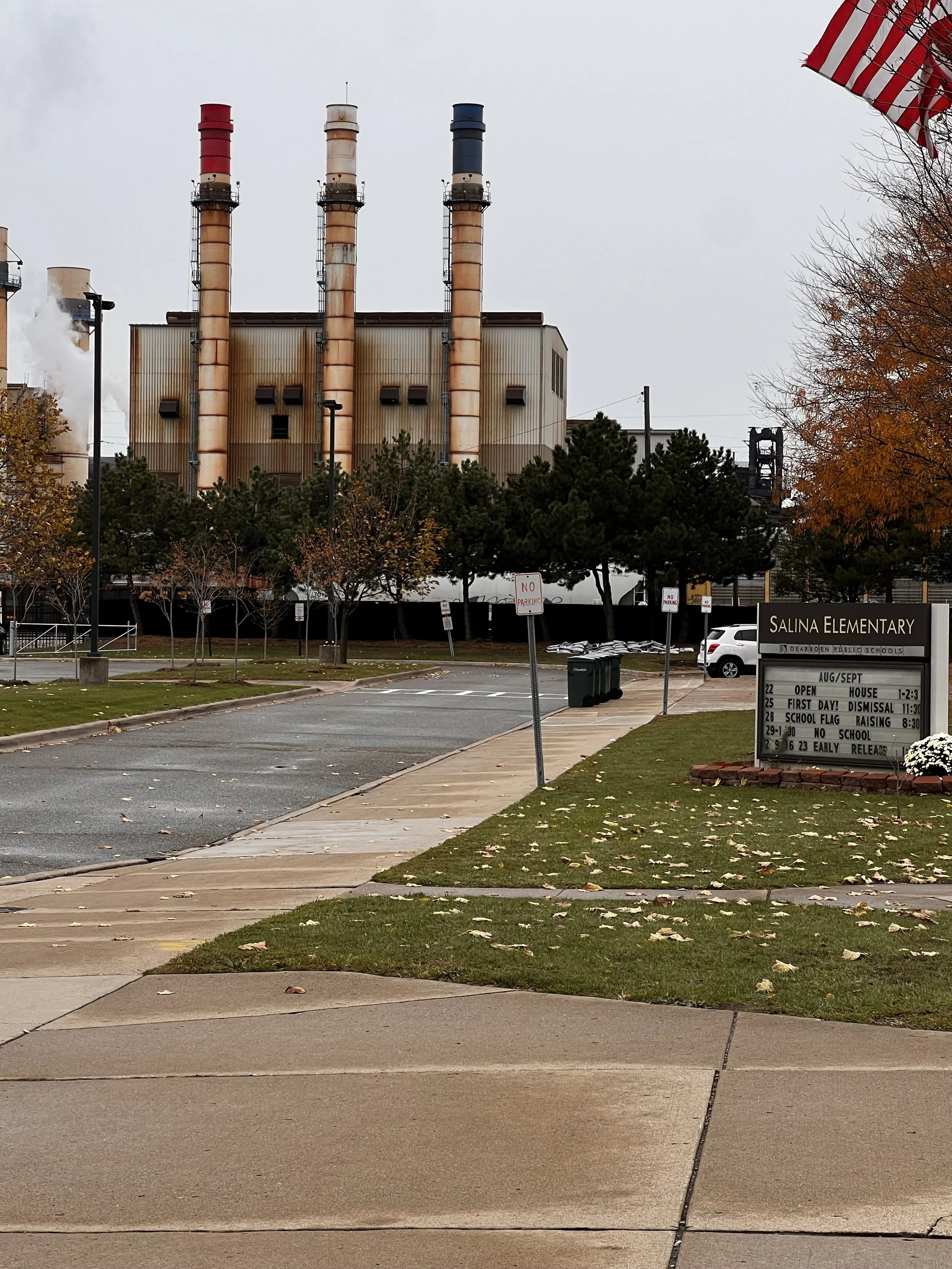
We didn’t find all the answers, but what I learned was what I already believed: community gets the job done. We can converse all day about electing the person who will make green steel possible, but the reality is that the people will be the ones who get it done. This was made clear to me when organizers from Clear the Air Detroit shared their stories with us. I was blown away by the similarities in the struggles they face with fenceline communities like mine and the ones we work with in Hammond, East Chicago, Gary, and beyond. Like us, they have had decision-makers make promises to help clear the air and shake hands with environmentalists, only to forget them once they secure their seats in office. Detroit environmental justice leader, Theresa Landrum, described how the community–with few resources at their disposal–used a vacuum and a bag to collect samples for testing to prove how unsafe the air was. They used that data, among other grassroots tactics, to have air monitors installed along their fencelines and air purifiers placed in their schools, which, by the way, are directly across the street from the Dearborn Works Steel Mill. The community did that. The people did that. That is the power of the people.
On our final day at the conference, we visited the Detroit Institute of Arts Museum. No trip to the Motor City is complete without a visit to the epic Diego Rivera mural, which fills an entire room with his paintings of steelworkers and Ford assembly plant workers. I could spend all day finding the symbolism in those walls. The way they tell the story of man and machine, the good and the bad—assembly line workers with green skin, poisoned by their work. Groups of well-dressed white folks touring the factory, gawking at the workers as if they were animals in a zoo. But overwhelmingly, I see the working-class people who built up our cities and are left with the worst consequences of this extractive economy. They look like my neighbors and friends. In this mural, the blast furnace is alight, the assembly line humming, but in the streets beyond these walls, the truth is hard to ignore. We need to find a better way, a just transition, to keep our communities and our environment healthy. We need a thriving regenerative economy powered by you and me, not Big Tech.
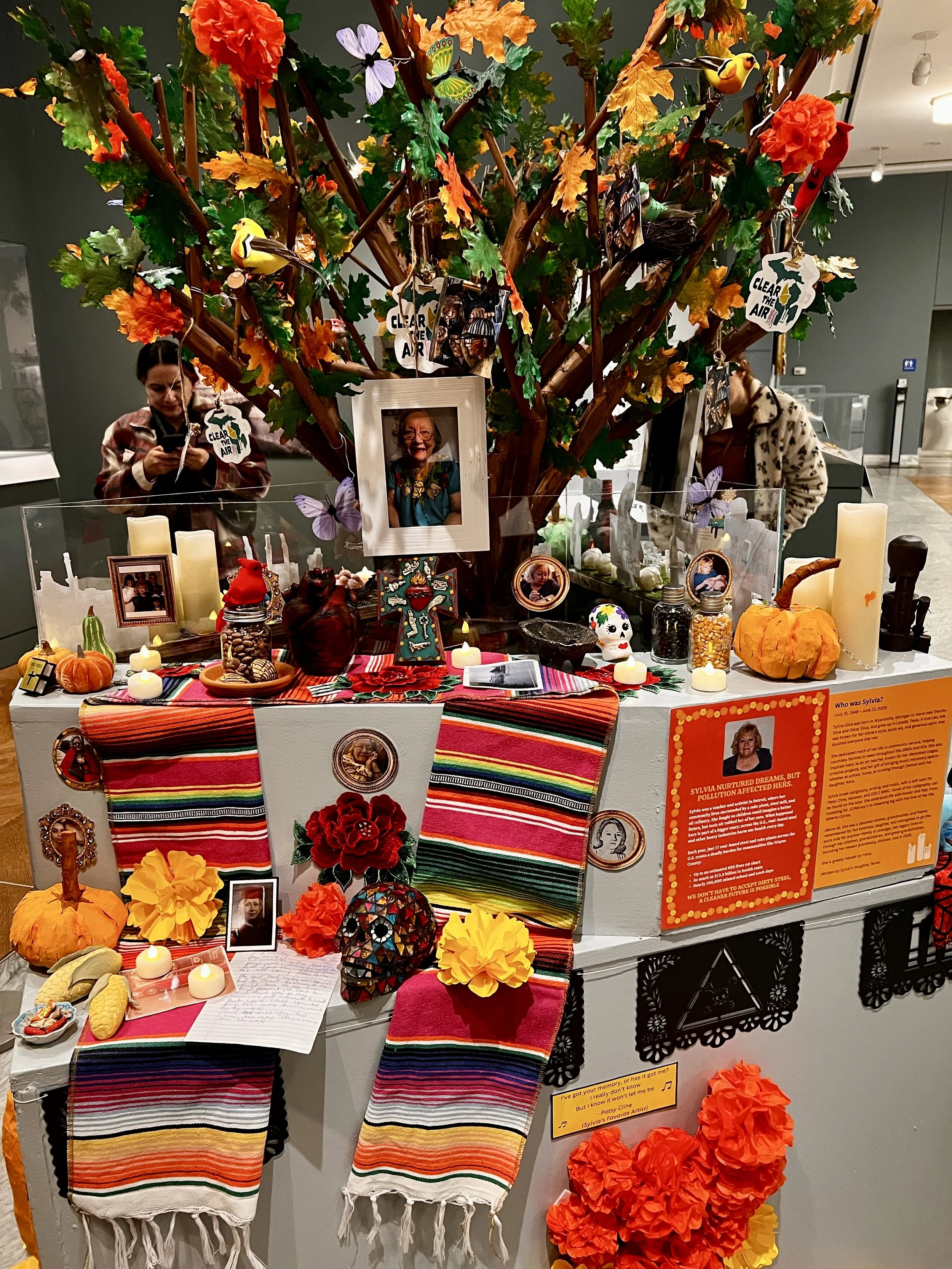
Among the museum's extensive collection of incredible works of art was an ofrenda built by Industrious Labs and its community. The altar, adorned with red, orange, and yellow flowers, honored loved ones who became victims of the side effects of living in and near the toxic steel industry. Enscribed were stories of the young and old whose time was cut far too short. Their personal items and photos were a moving memorial of the dangers of growing up and working in an industrial sacrifice zone. As I read the individual stories, I was reminded of my neighbors, my sisters, the students I work with, who didn’t choose where to be born, who don’t have a choice on where to live, but who are proud to be from the Region, because this is home. There is work to be done, and it will be us to make it happen because another world is possible.